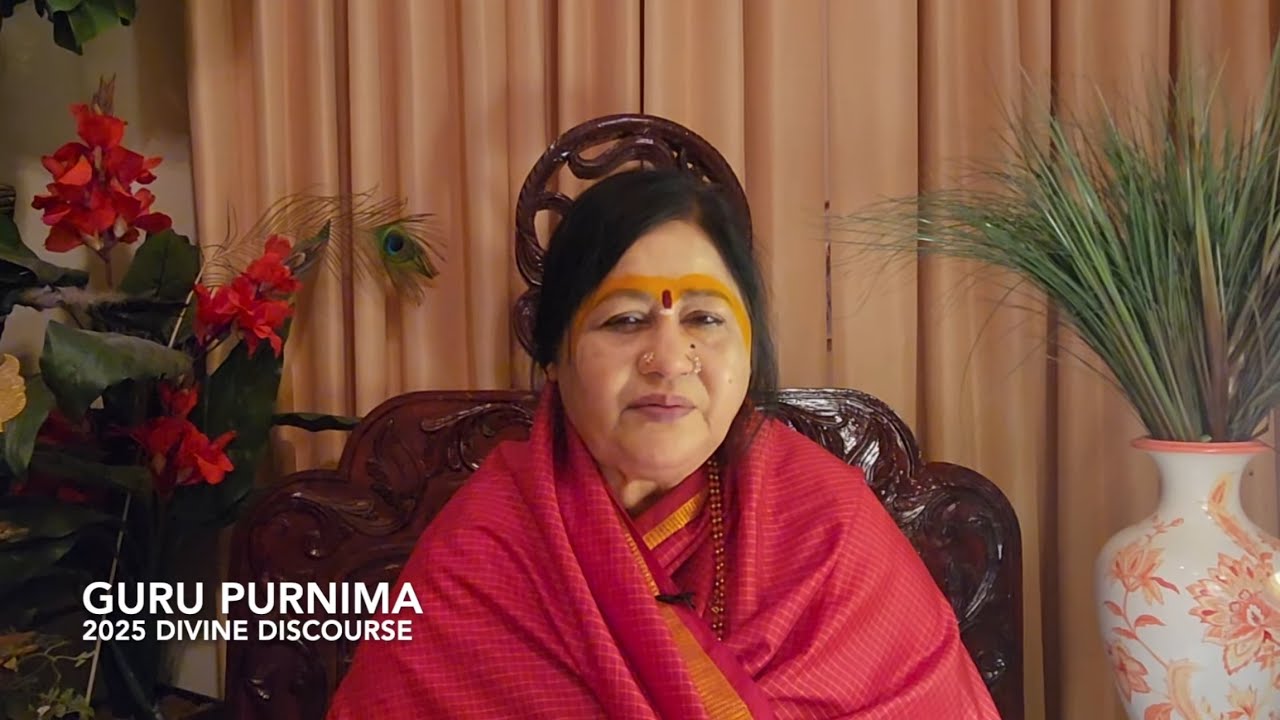
Sri Karunamayi performs the Ksheerabdisayana Narayana devotional composition, a classical Hindu song invoking Lord Narayana resting on the Ocean of Milk. The performance integrates vocal chanting, jala (percussion) rhythmic play, and tonal repetition of "Narayana" with mantra-based invocation (Om Shrim Lakshmi Maa), demonstrating how kirtan and raga practice serve as vehicles for devotional absorption and rhythmic meditation.
What is the Ksheerabdisayana Narayana composition?
The Ksheerabdisayana Narayana song is a traditional Hindu devotional piece centered on Lord Narayana, one of the primary names and forms of Vishnu in Hindu philosophy. "Ksheerabdisayana" refers to Narayana resting on the Ksheerabdi, the cosmic Ocean of Milk—a foundational mythological image in Hindu cosmology and bhakti (devotional) practice. The invocation "Om Shrim Lakshmi Maa" that opens the piece anchors the practice in the mantra-based tradition, calling upon both the divine principle of abundance (Shrim, associated with Lakshmi, the goddess of prosperity) and the material manifestation of grace.
Sri Karunamayi's interpretation is not merely a sung narrative but a rhythmic-devotional practice structured around the repetition and tonal variation of the name "Narayana." The piece emphasizes the practice of jala—the playing and mastery of finger cymbals or hand percussion—as a container for the devotional invocation. This integration of rhythm, voice, and mantra reflects a classical approach to kirtan in which the performer's technical command of timing and melodic phrasing is inseparable from the devotional intent.
How does rhythmic precision serve devotional practice?
Throughout the performance, Sri Karunamayi demonstrates a careful control of jala work (percussion rhythms), using the cymbals to punctuate and propel the vocal line. The repeated invocations of "Narayana"—sometimes full-voiced, sometimes more whispered or staccato—are woven into the rhythmic framework. This is not incidental ornamentation; rather, the rhythm is the container within which devotion is held and communicated.
The phrase "को अच्छी तरह" (literally "do it well" or "get it right") appears multiple times in the performance text, suggesting an explicit call for precision and care in execution. In bhakti traditions, technical excellence and devotional sincerity are not opposed. Instead, the precision demanded in executing rhythmic patterns, melodic phrases, and mantra repetitions is understood as a form of service—a way of honoring the divine through the discipline and integrity of the practice itself. The performer's concentration on timing and tone becomes a meditation in itself.
Why is mantra invocation paired with musical practice?
The opening mantra "Om Shrim Lakshmi Maa" establishes a sacred frame for the musical work that follows. In Hindu tantric and bhakti traditions, mantras are understood to embody specific vibrational or energetic frequencies associated with divine qualities. Shrim (also spelled Shreem) is traditionally linked to prosperity, beauty, and the fullness of material and spiritual grace. By anchoring the Ksheerabdisayana Narayana song in this invocation, Sri Karunamayi signals that the subsequent musical performance is not entertainment but a form of sadhana (spiritual practice)—a disciplined engagement with sound, rhythm, and devotional intention designed to align the practitioner's consciousness with divine presence.
The repetition of "Narayana" throughout the piece serves multiple functions. At the level of mantra, each utterance is an invocation and a gesture of surrender to the divine principle Narayana represents. At the level of raga (melodic framework), the name becomes a vehicle for exploring tonal color and emotional nuance. At the level of rhythm, it becomes a pulse that organizes both the musical structure and the performer's and listener's embodied awareness. This layering—mantra, raga, rhythm—is characteristic of classical Indian devotional music, where the sacred and the aesthetic are woven together.
What role does the performer's presence play in kirtan?
Sri Karunamayi's approach to this composition demonstrates that kirtan is not a passive recitation of pre-composed material but an active, moment-to-moment engagement with sound and devotion. The variations in volume, the shifts in rhythmic density, the moments of pause and the moments of acceleration—all of these are choices made by the performer in real time, responsive to the energy of the moment and the depth of connection being accessed.
The performance includes instances of what might be described as call-and-response or participatory elements (suggested by phrases like "और सुनाओ"—"and listen" or "sing along"), indicating an invitation for the listener or co-participant to engage not as a passive audience member but as an active participant in the devotional practice. This reflects a core principle of kirtan traditions: that the singing itself is the practice, and that the quality of participation—whether as performer or listener—shapes the depth and authenticity of the engagement.
How does raga structure organize devotional content?
While the full raga identity of this piece is not explicitly named in the performance, the musical structure reflects principles central to Indian classical music. The melody moves within a specific tonal framework, with characteristic phrases (called svaras or notes) and their ornamentations. The repetition of "Narayana" at different pitch levels and with different rhythmic placements allows the listener to experience the stability and variation within a coherent musical identity.
In bhakti music, raga serves not as arbitrary aesthetic structure but as a container for specific emotional and devotional states. Certain ragas are associated with dawn, evening, monsoon, or particular moods (such as longing, tranquility, or ecstatic joy). By choosing to work within a specific raga, the performer is aligning the devotional intention with the emotional resonance and traditional associations that raga carries. The jala work and the vocal phrasing together communicate and reinforce this emotional content.
Where to go from here
To deepen engagement with this material, consider exploring the broader mythology and iconography of Ksheerabdisayana Narayana—the image of Narayana resting on the serpent Ananta in the cosmic ocean. This cosmological vision is central to Hindu Vedantic philosophy and to devotional poetry across centuries. Reading classical Sanskrit hymns to Narayana, such as those found in the Vishnu Sahasranama (the thousand names of Vishnu), will enrich understanding of the layers of meaning contained in a single invocation of the divine name.
For those interested in kirtan practice itself, studying the relationship between rhythm and melody—between the mridangam (drum) and the voice in classical Indian music—offers practical insight into how structure and spontaneity coexist in devotional performance. Exploring other recordings of the Ksheerabdisayana Narayana composition in different raga frameworks or by different performers will reveal how a single devotional text yields multiple musical and spiritual expressions.
If you are drawn to mantra practice, exploring the significance of Shrim and its role in Hindu tantra and prosperity consciousness will deepen the meaning of the opening invocation. The integration of mantra, raga, and rhythm demonstrated here offers a template for understanding how sacred sound functions not as abstract metaphor but as a lived, embodied practice.