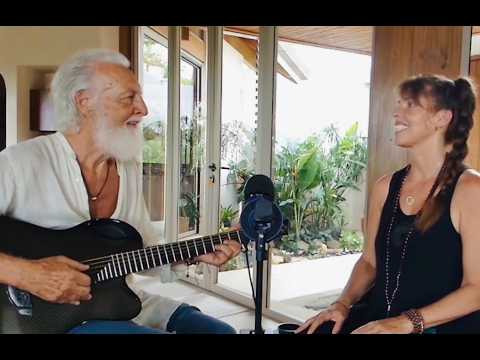
Lokah Samasta is a Sanskrit blessing that translates as "May all beings be happy. May all my thoughts, words and actions contribute in some way to the happiness of all." Deva Premal and Miten perform this sacred mantra live in Ljubljana, Slovenia, weaving it with musical accompaniment by Manose. The mantra embodies a practice of radiating goodwill toward all sentient beings—not as abstract spirituality, but as an actionable intention that connects personal responsibility (thoughts, words, actions) with universal compassion.
What Does Lokah Samasta Mean?
Lokah Samasta is a Sanskrit phrase composed of two parts. "Lokah" refers to the world or all beings; "Samasta" means all or complete. The full invocation—"Lokah Samasta Sukhino Bhavantu"—translates to "May all beings be happy." The blessing is not static; it extends into personal intention: "May all my thoughts, words and actions contribute in some way to the happiness of all." This structure is significant. It does not invoke happiness as something to be granted externally or passively received. Instead, it places responsibility on the speaker's own consciousness and conduct.
The mantra draws from the Sanskrit tradition of Vedic and Yogic philosophy, where such invocations serve as tools for reorienting the mind toward compassion and away from self-centeredness. By vocalizing the intention repeatedly, practitioners aim to internalize the aspiration until it shapes their moment-to-moment choices.
How Does Repetition Shape the Mantra's Effect?
When Deva Premal and Miten chant Lokah Samasta in the Ljubljana performance, they move beyond a single recitation into a rhythmic, melodic repetition. The phrase cycles through the invocation—"Loka samasta sukhino bhavantu"—layered with musical accompaniment. This is not merely singing; it is kirtan, a devotional call-and-response or cyclical chanting tradition in Hindu and yogic contexts.
The repeated vocalization serves several functions. First, it anchors attention. The mind, which habitually wanders toward worry, desire, or distraction, is given a specific object of focus—the words and sounds of the blessing itself. Second, the musicalization creates a container for sustained concentration; the melody and rhythm support the nervous system in remaining present. Third, the communal dimension (even in a recorded performance, listeners are invited to join internally) generates a felt sense of participation in something larger than individual concern.
In yogic and meditative contexts, such repetition is understood not as brainwashing but as training—the same way an athlete trains a muscle through repetition. Each iteration of the mantra is believed to strengthen the neural pathways associated with compassion and goodwill.
What Is the Relationship Between Personal Conduct and Universal Blessing?
A distinctive feature of Lokah Samasta is its acknowledgment that the speaker's own thoughts, words, and actions matter. This is not metaphorical. The mantra holds that if you wish all beings happiness, your personal integrity—how you think, what you say, what you do—is inseparable from that wish. If you harbor resentment in thought, speak unkindly, or act with cruelty, you are, in effect, undermining the blessing you are invocating.
This creates a feedback loop. Chanting the mantra generates an intention; living according to that intention requires that you examine and refine your conduct. Over time, the boundary between the inner (the chanting, the intention) and the outer (the behavior in daily life) becomes porous. The mantra is not a magic spell that works independent of the user; it is more like a mirror or a compass that aligns your actions with your deepest values.
Why Does Deva Premal and Miten Perform Lokah Samasta with Musical Accompaniment?
The Ljubljana performance includes Manose on what appears to be a stringed instrument, weaving melodic and rhythmic elements around the chanted text. Music serves multiple purposes in this context. In Hindu devotional tradition, music and sacred sound are inseparable; raga (the melodic framework in Indian classical music) is understood to have its own psychological and spiritual properties. The specific raag chosen can influence the mood and the meditative state of the listener and performer alike.
For a modern audience, musicalization also makes the mantra more accessible and emotionally resonant. A pure chant, while powerful to those trained in Sanskrit traditions, may feel distant or alien to Western listeners. The addition of instrumental music bridges cultural and linguistic distance; the feeling of blessing, peace, and universal care can be experienced through the music even if the Sanskrit words are not fully understood.
Furthermore, the live performance context—the specific energy of a room, the synchronization of many voices or hearts, the presence of the teachers—amplifies the experience. A recorded performance, like this Ljubljana session, extends that presence across time and space. Listeners decades later can still access the intention and the meditative quality that the original performers infused into the session.
How Can You Practice Lokah Samasta in Daily Life?
Lokah Samasta is not confined to formal chanting sessions. The phrase can be integrated into daily practice in several ways:
- Morning intention-setting: Begin the day by chanting or silently reciting the mantra, consciously setting your intention that your day will be lived in service of all beings' happiness.
- Moment of conflict: When you encounter a difficult person or situation, pause and silently invoke the mantra. This interrupts reactive patterns and reconnects you to your deeper values.
- Bedtime reflection: At the end of the day, review your thoughts, words, and actions in light of the mantra. Did your conduct align? Where did you fall short? This builds self-awareness without judgment.
- Community chanting: Participate in group kirtan or chanting circles where the mantra is sung with others. The collective resonance deepens the experience and the sense of connection.
- Silent repetition: During meditation, use Lokah Samasta as a mantra to anchor awareness and cultivate compassion, particularly if you are struggling with anger, fear, or isolation.
The key is consistency. Like any practice, the benefits accumulate over time. A single encounter with the mantra may inspire a moment of peace or goodwill, but regular engagement shapes deeper patterns of thought and behavior.
What Is the Broader Context of This Mantra in Yoga and Vedic Philosophy?
Lokah Samasta belongs to a family of Sanskrit blessings that reflect core yogic and Vedic principles. Yoga itself, often understood in the West as physical postures, is fundamentally a philosophy of union—the integration of individual consciousness with universal consciousness. Mantras like Lokah Samasta are tools for that integration.
In Vedic thought, the universe is not seen as divided into separate, isolated beings. Rather, there is an underlying unity or wholeness from which all forms arise. When you invoke the happiness of all beings, you are, in a sense, invoking your own truest nature—the part of you that recognizes no ultimate boundary between self and other. This is not sentimentality; it is a metaphysical understanding that has been systematized in texts like the Upanishads and elaborated in traditions like Advaita Vedanta.
Deva Premal and Miten, by bringing this mantra to global audiences through their music and teaching, are participating in an ancient transmission. They are not inventing the mantra or repackaging it as a product; they are serving as conduits for a practice that has been refined over centuries.
Where to Go From Here
If Lokah Samasta resonates with you, consider exploring related mantras and chanting practices. The Gayatri Mantra, another widely-used Sanskrit blessing, focuses on illumination and clarity. "Om Shanti Shanti Shanti" (Peace, peace, peace) is a simpler mantra that carries similar intentions of universal peace. You might also explore the broader philosophy of Ahimsa (non-harm) and Metta (loving-kindness) meditation from Buddhist traditions, which share the same underlying ethic of radiating care toward all beings.
Resources like the Gayatri Sangha app (linked to Deva Premal and Miten's website) offer guided chanting and further teaching on mantras and yogic philosophy. If you are drawn to the live, communal experience, many yoga studios, kirtan groups, and meditation centers now offer regular chanting sessions. The combination of study (learning the meaning and philosophy), practice (regular chanting), and community (joining others in the intention) creates a holistic engagement with these sacred sounds and their transformative potential.