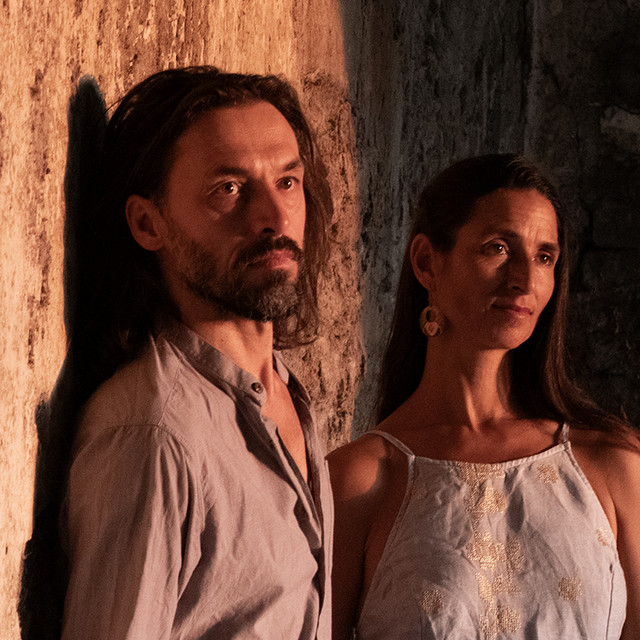
The Ra Ma Da Sa healing mantra is a traditional Kundalini yoga chant used for physical healing and energetic restoration. This sacred sound practice combines Sanskrit phonemes—Ra (sun energy), Ma (moon energy), Da (earth energy), and Sa (infinity)—with deliberate hand and arm movements called Celestial Communication to direct healing vibrations through the body. The practice integrates sound therapy, somatic movement, and intention-setting to support wellness on multiple levels.
What Is the Ra Ma Da Sa Mantra?
Ra Ma Da Sa is a foundational healing mantra in Kundalini yoga tradition. Each syllable carries specific vibrational and energetic qualities. Ra represents the sun's vital, purifying energy; Ma embodies the moon's cool, nurturing, receptive quality; Da connects to the earth's grounding and stabilizing force; and Sa points to infinite consciousness and the underlying unity of all existence. When chanted together, these four syllables create a comprehensive healing frequency that draws on solar warmth, lunar receptivity, earthly stability, and cosmic awareness.
This mantra operates on the principle that sound is a form of subtle energy capable of affecting both physical tissue and energetic bodies. The vibrational frequency of the chant is believed to resonate with the chakras—the body's energy centers—and promote coherence across multiple dimensions of health: physical, emotional, and spiritual.
How Does Celestial Communication Enhance the Practice?
Celestial Communication, as developed by Sara Avtar Kaur, is a system of precise hand and arm movements designed to amplify and direct the mantra's healing energy. Rather than simply sitting still while chanting, practitioners use synchronized gestures that correspond to the phases and qualities of each syllable. These movements act as physical anchors for intention and as energetic amplifiers that channel the mantra's vibration through specific meridians and energy pathways in the body.
The hand positions and arm movements serve multiple functions: they help the practitioner embody the mantra rather than merely recite it intellectually, they create a somatic-vocal loop that deepens the practice's neurological impact, and they allow the healer (or the person being healed) to direct focused intention toward areas of discomfort or imbalance. The movements are not arbitrary but are structured to align with traditional energy anatomy and the flow of prana (life force) through the body.
The Healing Intention Behind Ra Ma Da Sa
In Kundalini yoga, the Ra Ma Da Sa mantra is specifically used for physical healing. Many practitioners and teachers use it when someone is ill, injured, or recovering from medical treatment. The mantra is traditionally offered as a form of energetic support—not as a replacement for medical care, but as a complementary practice that mobilizes the body's own healing capacity.
The healing potential rests on several mechanisms: the vibrational properties of Sanskrit sounds are thought to stimulate cellular regeneration and immune function; the meditative focus required to chant and move simultaneously shifts the nervous system out of fight-or-flight response into parasympathetic (rest-and-restore) activation; and the act of directing conscious intention toward healing engages the mind-body connection in ways that research increasingly shows can influence recovery and wellbeing.
How to Practice Ra Ma Da Sa with Hand Movements
The practice typically involves chanting the mantra while performing the Celestial Communication hand movements. A practitioner might sit comfortably, spine straight to allow energy to flow freely, and begin to chant Ra Ma Da Sa in a rhythmic, sustained manner. As each syllable is sung, the corresponding hand and arm movement is executed—these gestures often involve sweeping, circling, or directing motions that feel like you are gathering and channeling healing energy.
The practice can be done for oneself or directed toward someone else who needs healing support. When directed toward another person, the practitioner might visualize the healing energy flowing from their heart or hands into the recipient's body, settling into areas that need restoration. The combination of sound, movement, visualization, and intention creates a multisensory and energetically coherent healing session.
Most practitioners recommend chanting the mantra for 11 minutes as a minimum dose, though shorter or longer sessions are also valid. The rhythm and repetition allow the nervous system to entrain to the healing frequency, and the extended duration gives the body time to shift into a deeper state of receptivity.
The Role of Sanskrit Phonetics in Healing
Sanskrit is not merely a language in the conventional sense; in yogic philosophy, it is understood as a vibrational technology. Each sound in Sanskrit is believed to activate specific neural pathways and energy channels. The sounds Ra, Ma, Da, and Sa are root syllables (bija mantras) that carry primordial frequencies.
When these sounds are chanted, they stimulate the vagus nerve, affect hormone secretion, and create resonance patterns that extend beyond the auditory system into the body's cellular and energetic architecture. The precision of Sanskrit pronunciation matters because the correct articulation ensures that the full vibrational frequency is activated. This is why traditional teachers emphasize proper chanting technique: the goal is to allow the sound to permeate the body rather than remain a surface-level vocalization.
Why Hand and Arm Movements Matter
The Celestial Communication movements are not decorative; they are a functional part of the healing protocol. In energy anatomy, the hands are said to be receivers and transmitters of prana. The fingers correspond to different meridians and acupuncture points, and deliberate hand positions can open or direct energy flow. The arms extend the reach of intention and allow the practitioner to create geometric patterns in space that correspond to healing geometry and sacred proportion.
Additionally, the coordination of breath, sound, and movement activates the somatic nervous system in a way that pure chanting alone does not. The body becomes a tuning fork for the healing frequency, and movement ensures that the vibration is distributed throughout the physical form rather than concentrated in the throat or head.
Scientific Context and Energy Healing
While the Ra Ma Da Sa practice is rooted in traditional knowledge rather than clinical trials, modern research has demonstrated mechanisms by which similar practices work. Studies on mantra chanting show effects on heart rate variability, blood pressure, cortisol levels, and brain wave patterns. Research on visualization and intention has revealed that conscious focus can influence immune response and pain perception. And somatic practices that combine movement and sound have shown benefits for trauma recovery, anxiety reduction, and general wellbeing.
The framework of energy medicine—while not yet fully validated by conventional biomedicine—describes coherent systems of information that operate alongside biochemistry. From this perspective, the Ra Ma Da Sa mantra and its movements work by harmonizing the body's subtle energetic anatomy with the intention of healing, which in turn influences emotional resilience, immune function, and the rate and quality of physical recovery.
Where to Go From Here
To explore the Ra Ma Da Sa healing mantra, begin by learning the basic chant and the corresponding Celestial Communication movements. Teachers in the Kundalini yoga tradition, particularly those trained in Yogi Bhajan's lineage (which emphasizes healing mantras), can provide proper instruction and ensure that your pronunciation and movement are aligned with the tradition. Videos and recordings, such as the performance by Mirabai Ceiba, offer accessible entry points for understanding the practice's form and feeling.
If you are drawn to use this mantra for healing—whether for yourself or to support someone else—commit to a consistent practice over several weeks. Many practitioners report subtle but significant shifts in energy, pain levels, and overall sense of wellbeing when they maintain the practice. Remember that mantra and movement are complementary to, not substitutes for, professional medical care. The practice works best as part of an integrated approach to health that honors both the body's physical needs and its subtle energetic dimensions.


