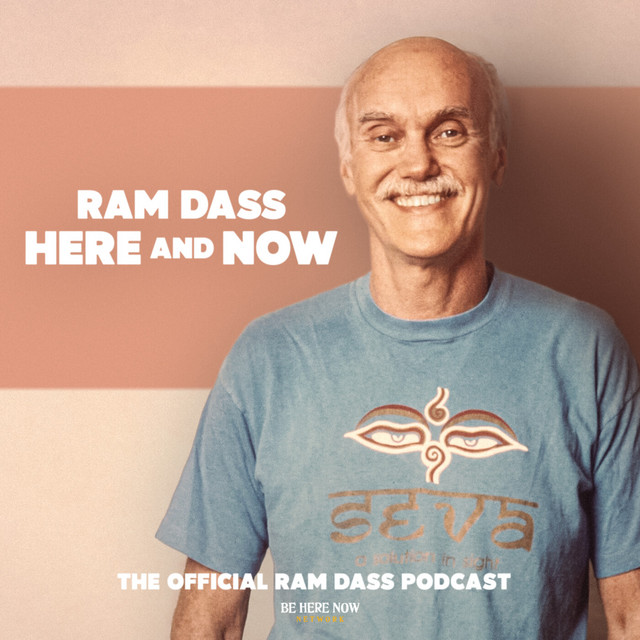
Ram Dass's "The Unimaginable" is a folk-rooted spiritual song that directly addresses the emotional reality of isolation, doubt, and the search for meaning. Through paired directives—"stand strong" and "stay soft"—the song proposes that resilience does not require hardening, but rather maintaining both structural integrity and emotional openness. The central insight is that prayer and witnessing shift perception itself: when you pray, "the unimaginable is all you'll see," suggesting that contemplative practice rewires what becomes visible or possible. The song offers practical encouragement without denying the genuine difficulty of being human and aspiring toward spiritual maturity.
What does it mean to stand strong and stay soft?
At the heart of "The Unimaginable" lies a paradox often overlooked in Western resilience teaching: strength and softness are not opposites. When Ram Dass sings "stand strong and you'll weather the storm, stay soft and your heart will be warm," he is articulating a non-dual approach to human difficulty. To stand strong is to maintain integrity, backbone, and the capacity to hold one's ground in the face of chaos. But to stay soft is to remain permeable, responsive, and emotionally available rather than defended.
Most cultural narratives about resilience teach hardening—armor yourself, toughen up, don't let it affect you. Ram Dass rejects this binary. The song suggests that a heart that remains warm (soft) is actually what enables you to weather storms (stand strong). This reflects a teaching found throughout contemplative traditions: defensive contraction ultimately makes us brittle and more prone to breaking under pressure, whereas a supple awareness—one that can feel and move and respond—has greater capacity for endurance.
The practical implication is that when facing isolation or doubt, your survival does not depend on emotional shutdown. Instead, it depends on maintaining both structure and sensitivity. You can acknowledge loneliness ("I know that it gets lonely in there") without collapsing into it, precisely because you remain emotionally available to yourself and others.
Why does the song emphasize that loneliness is not about blame?
A recurring refrain in the song is "and there's no one left to blame." This is a crucial teaching often missed in pop-spiritual discourse. Ram Dass is not saying loneliness is your fault. Rather, he is pointing out that once you recognize no one is to blame—neither yourself nor others nor the universe—you're freed from the secondary suffering that comes from searching for a culprit. This is what Buddhist psychology calls the distinction between pain and suffering: pain is inevitable; suffering is the story we construct around it.
When isolation strikes, the mind often generates narratives: *I must have done something wrong. People are selfish. The world is broken. I deserved this.* Each of these stories keeps energy locked in blame, which is a form of continued engagement with the problem. By singing "there's no one left to blame," Ram Dass invites the listener to stop the cycle and simply meet reality as it is. This paradoxically opens the door to acceptance and change, because you're no longer defending a narrative about who caused the loneliness.
This teaching aligns with the broader architecture of the song, which moves the listener from isolation to connection not through fixing what went wrong, but through a shift in perception and belonging.
How does prayer transform what becomes visible?
The climactic lines of the song—"Pray and the unimaginable is all you'll see, it's all that you will see"—introduce prayer as a perceptual technology rather than mere supplication. Ram Dass is not suggesting that prayer gets you what you want; rather, prayer changes what you notice, what becomes salient, what becomes possible in consciousness.
In contemplative practice, prayer is understood as a form of attention that opens the mind to dimensions of reality that contraction closes off. When you pray—when you turn toward something larger than the small self—the field of what's available shifts. Possibilities that seemed foreclosed suddenly become visible. The song proposes that this is not magical thinking, but a direct consequence of how consciousness works: as you widen your sphere of awareness, more becomes real to you.
The phrase "the unimaginable" is key. It is not the attainable, the probable, or the rational. It is what the ordinary thinking mind cannot conceive of. Yet the song asserts that through prayer, this becomes what you see. This reflects a teaching common to many wisdom traditions: the smallest shift in consciousness can reveal an entirely different landscape of possibility. When you are contracted in fear and self-blame, the unimaginable remains invisible. When you pray—when you open, surrender, become receptive—it appears.
What is the song's response to doubt and hopelessness?
The second verse directly names the condition of advanced spiritual doubt: "So you don't have the answer, and yet time marches on. No road seems to lead you to hope and the noise is louder than the song." This is not the doubt of a beginner, but the doubt of someone who has genuinely looked and found no satisfying certainty. The phrase "no road seems to lead you to hope" describes a state where even the conventional maps of meaning—spirituality, relationships, accomplishment—appear hollow.
Rather than offering a quick antidote, Ram Dass acknowledges this state directly. The song does not pretend to "fix" hopelessness through positive thinking. Instead, it holds the listener's hand and reminds them: even when you feel like the noise is louder than the song (the chaos is louder than meaning), you are not alone. "The whole world is walking with you. And a change is coming just the same."
This is a teaching about trust in the face of no proof. You don't have the answer. Time marches on regardless. But the song asserts that change is happening beneath the surface, independent of whether you can feel it or imagine it. This reflects a faith not in a particular outcome, but in the fundamental nature of existence itself: nothing stays static. If you are in a dark place, you will not remain there forever—not because you can control it, but because change is the only law.
How does the idea of collective presence work spiritually?
A core lyric appears repeatedly: "The whole world is walking with you." This is not metaphor in the sentimental sense. In contemplative understanding, separation is an illusion of form; consciousness itself is shared. When Ram Dass sings that the whole world walks with you, he is invoking a non-dual insight: your individual suffering is also the world's suffering, and the world's evolution is also your own.
This teaching comes directly from Advaita Vedanta and similar non-dual philosophies where individual consciousness and universal consciousness are understood as the same phenomenon appearing in different forms. Practically, this means loneliness—while subjectively real in the moment—is not absolutely true at a deeper level of analysis. You are not actually separate, even when it feels that way.
For the listener struggling with isolation, this is not a dismissal of the loneliness but an invitation to a larger context in which that loneliness is contained. You feel alone in the room, but the whole world is walking with you in consciousness. Both can be true. This kind of both/and awareness is what allows someone to acknowledge difficulty without being crushed by it.
What is the role of artistic form in delivering this message?
The song is structured musically to embody its teaching. An acoustic guitar grounds the piece in simplicity and directness—there is no elaborate production to hide behind. The spare arrangement of drums, bass, and cellos creates a sense of intimate space, not a grand concert. This musical nakedness mirrors the emotional honesty of the lyrics: Ram Dass is not performing spirituality; he is sharing a hand held out in real time.
The repetition of the core directives—"stand strong," "stay soft," "pray"—functions as a mantra, a practice. By hearing these phrases again and again, anchored in melody, the listener can begin to internalize them not as ideas but as embodied instructions. This is why spiritual songs have power that essays do not: they move language from the intellectual center to the body and nervous system through sound.
The folk idiom itself is significant. Folk music traditionally addresses collective human experience—work, loss, love, injustice—and frames the individual's struggle as part of a larger human story. By choosing this form rather than, say, a more contemporary R&B or electronic style, Ram Dass situates the listener within a lineage of human endurance and collective witness that stretches backward and forward through time.
Where to go from here
If this song resonates, the next step is not intellectual understanding but practice. Ram Dass's teaching here is operational: it asks you to do something. The song invites three concrete actions: speak out love (vocalize what is true and kind), stand strong (maintain structure), and pray (turn attention toward something larger). These are not beliefs to adopt but practices to test. In the next moment of isolation or doubt, you might use the song as an anchor, allowing its rhythms and directives to guide you toward the state it describes. You might investigate for yourself whether prayer—however you understand it—actually does shift what becomes visible. You might notice what happens when you remain soft rather than hardening against difficulty. The song's authority comes not from its philosophical sophistication but from its willingness to meet human beings where they actually are: lonely, uncertain, and still trying. That same meeting place is where your own deeper knowing emerges.